
Five Most Interesting Churches in Berlin
If you are someone visiting Berlin for the first time, you will have seen some churches in the list of recommended places to visit. This is because a lot of churches here are majestic, pretty, and often become good photo spots for tourists. However, what many didn’t know is that some of the less famous churches carry a lot of interesting history that shaped the city itself.
However, if you are short on time or prefer the “must-see” highlights, check our other articles such as:
But if you are a traveler or even a local who likes churches and historical stories, this guide is written for you.
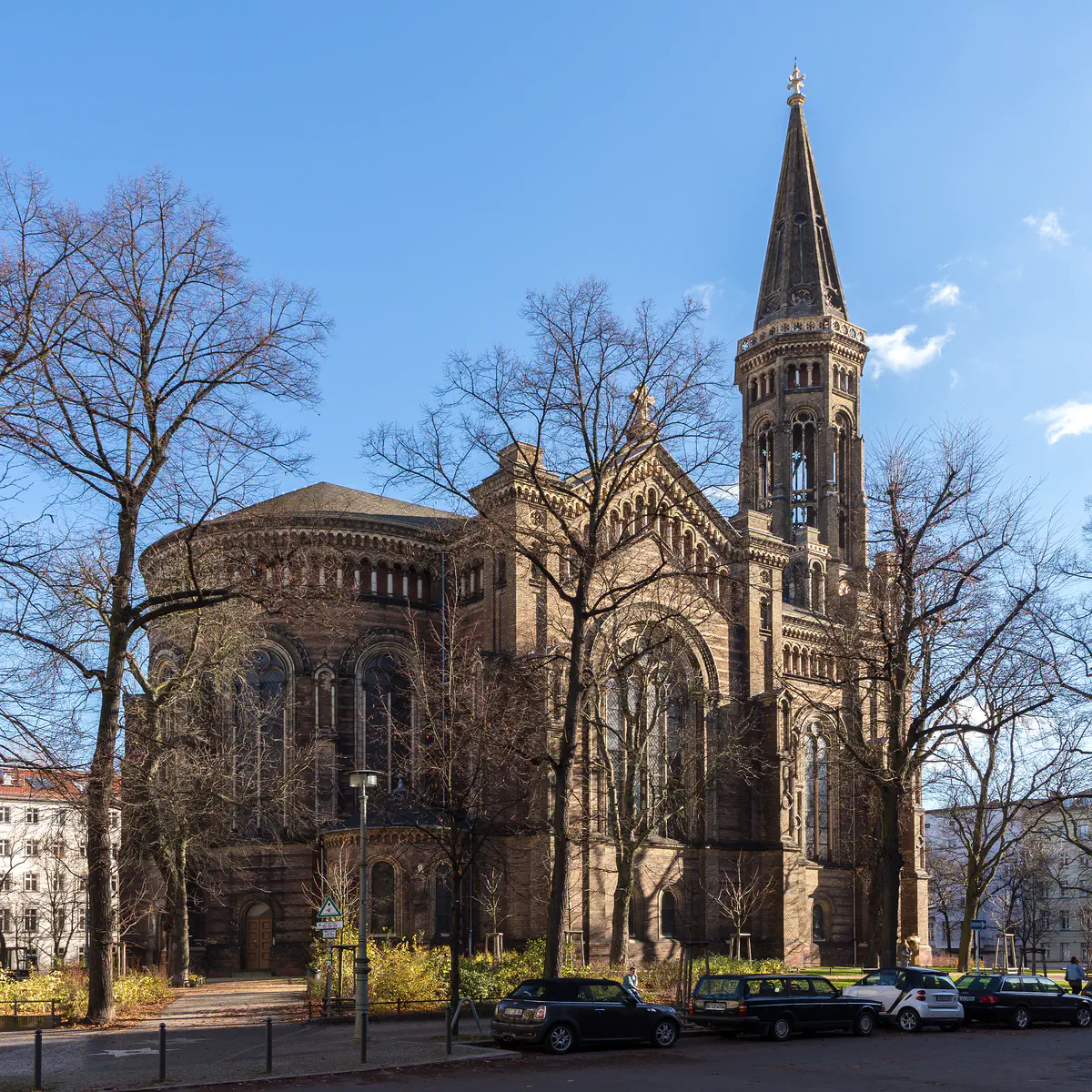
1. Zionskirche – Dietrich Bonhoeffer’s Church of Early Resistance
I have come to the conclusion that I have made a mistake by coming to America. I must live through the difficult period of my nation’s history with the Christian people of Germany. I shall have no right to participate in the reconstruction of Christian life in Germany after the war if I do not share the trials of this time with my people.
Dietrich Bonhoeffer is a famous German pastor known for opposing Hitler until his death. He was preaching against the Hitler’s party up until 1933 in the Zionskirche. He preached against the Führer principle, warned openly about the idolatry of the nation, and refused to align with the Nazi ideology.
After Hitler became chancellor in 1933, Bonhoeffer left Germany for a short period due to increasing pressure. He later returned and continued to support the resistance within the church, including helping to run illegal theological seminaries, which were eventually shut down by the secret police. In 1939, an American friend offered him refuge in the United States, but after less than a month he decided he had made a mistake and returned to Germany. He then stayed in Germany until he was arrested and executed by the Nazi regime in 1945.
If you visit the Zionskirche today, you can see the permanent exhibition “Erinnerung wird zur Kraft der Gegenwart” (Memory becomes the power of the present). The phrase comes from Bonhoeffer himself and now serves as the title of an exhibition that tells the story of Bonhoeffer and the wider resistance movement.
If this history interests you, you can also visit the nearby Gethsemanekirche. Bonhoeffer never served there, but decades later it became one of the most important symbols of East German resistance during the peaceful revolution of 1989.
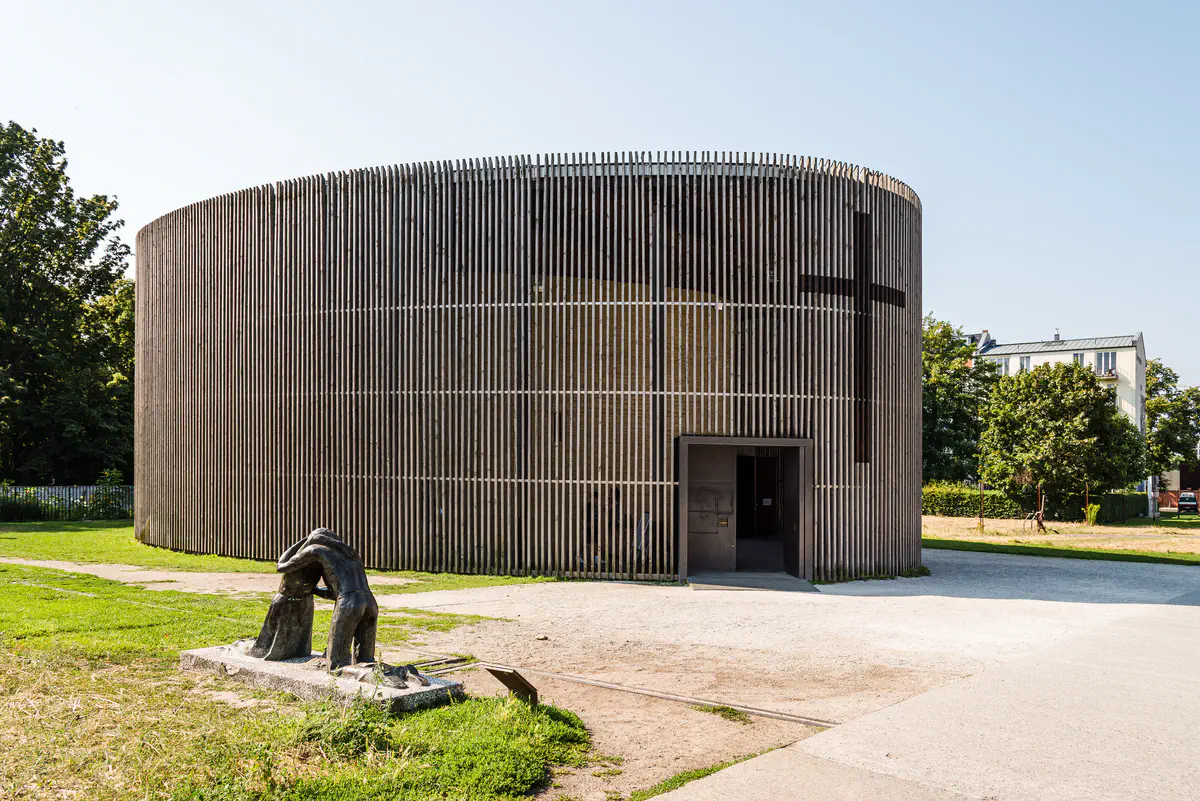
2. Kapelle der Versöhnung (Chapel of Reconciliation) – A Church Between the East and the West
When Berlin was divided, the border consisted of two barriers, one facing West Berlin and another facing East Berlin. Between them lay a space known as the “Death Strip.” This area was heavily militarized. Border guards patrolled it constantly with support from watchtowers. This was the place where people trying to escape risked being shot, and the original Versöhnungskirche (Church of Reconciliation) stood directly inside this zone.
After the Berlin Wall was built in 1961, the congregation could no longer access the church. In 1985, four years before the Wall fell, East German authorities dynamited the building as part of the border fortifications. The church was later rebuilt in 2000 as the Kapelle der Versöhnung, using rammed earth walls that include crushed bricks from the destroyed church.
Beneath the former church site lies an unexploded World War II bomb. It could not be safely removed, which meant the ground could not be fully excavated and the original foundations had to remain untouched.
In the area around the chapel, you can explore preserved remains of the Berlin Wall along Bernauer Straße. The Berlin Wall Memorial keeps sections of the original Wall and border installations, making this an interesting place in the city to understand how the division of Berlin physically worked.
3. Französischer Dom & Deutscher Dom – Church of Coexistence and Tolerance
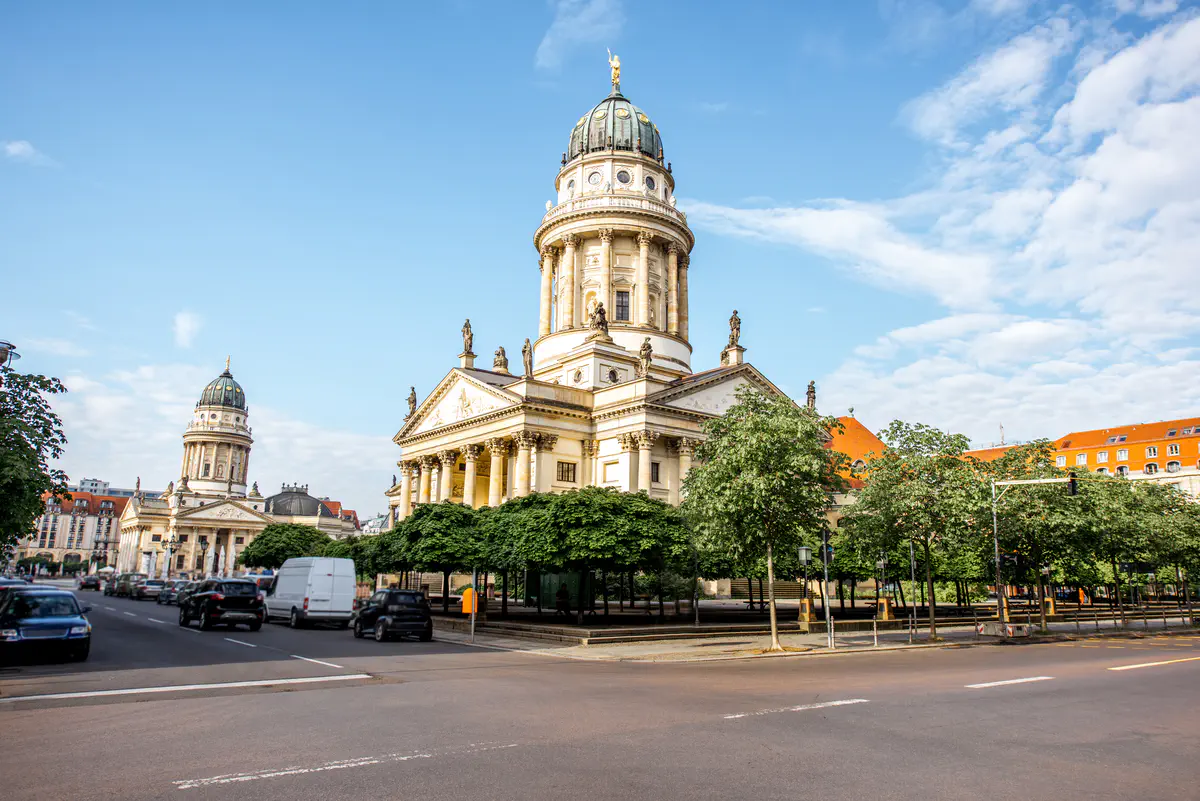
On the famous Gendarmenmarkt stand two domes that look very similar at first glance. These two churches frame the square together with the Konzerthaus and tell a story of coexistence and tolerance.
As the name suggests, the Französischer Dom was built for French people, in particular the Huguenot Refugees. In 1685, in favor of Catholics, the French king revoked an edict that allowed Protestants at that time to freely do their worship. Around 200.000 Huguenot people were persecuted and they fled the country. Around 6000 Huguenots settled in what is now Berlin and resided there. At that time, Berlin had only around 20.000 people, so the French Huguenots made up around 20% of the city population. They were welcomed and given religious freedom, free housing, tax exemptions, and many things to accommodate them here. The Huguenots soon transformed Berlin through their skills in craftsmanship, trade, finance, and various fields.
Today if you visit the Französischer Dom, you can explore this history in the Huguenot Museum, located inside the dome tower, and enjoy panoramic views over Berlin from the viewing platform.
Opposite stands the Deutscher Dom, which historically served the German-speaking Protestant congregation. Although both buildings are called “Dom” (cathedrals), neither was one in the strict church sense. Their domes were added later for architectural symmetry, creating the beautiful square we see today and become a symbol of coexistence tolerance between the German and the French refugees.
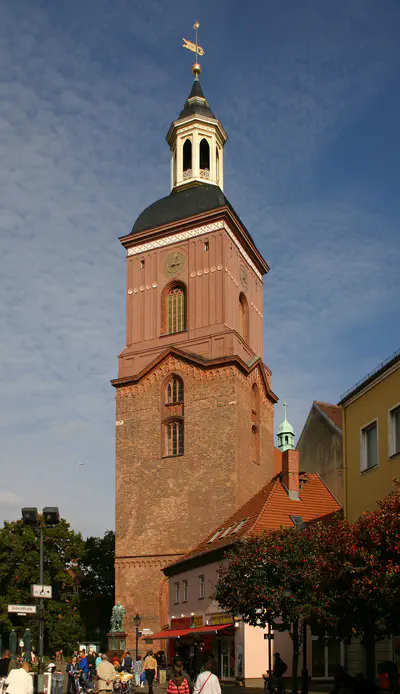
4. St. Nikolai (Spandau) – Where the Reformation Took Root in Berlin
It is important to remember that for centuries, being Christian in Berlin meant being Catholic. Even after the Reformation began in 1517, Berlin and Brandenburg remained Catholic for more than twenty years.
This changed in 1539, when Joachim II of Brandenburg publicly received communion according to Lutheran practice at St. Nikolai Church in Spandau. This event marked the official introduction of Protestantism in Berlin and Brandenburg. In this sense, St. Nikolai can be seen as the birthplace of Protestant in Berlin, and Protestant is allowed from that moment on. People might know where reformation originated from, but few will know where the first protestant church in Berlin was. There is a reason why the address of the church is on the “Reformationsplatz 1” .
Over the course of the late 16th century, churches across Berlin and Brandenburg became overwhelmingly Protestant. Catholic institutions were unfortunately dissolved or reorganized, and Lutheran worship became the norm.
Architecturally, St. Nikolai offers a mix of Gothic and Baroque elements. While the church does not feature a major exhibition, it is worth visiting for its historical significance. A visit here is best combined with a walk through Spandau Old Town, which offers a calm and authentic atmosphere away from the city center.
5. St. Hedwig’s Cathedral – Berlin’s Catholic Story in a Protestant City
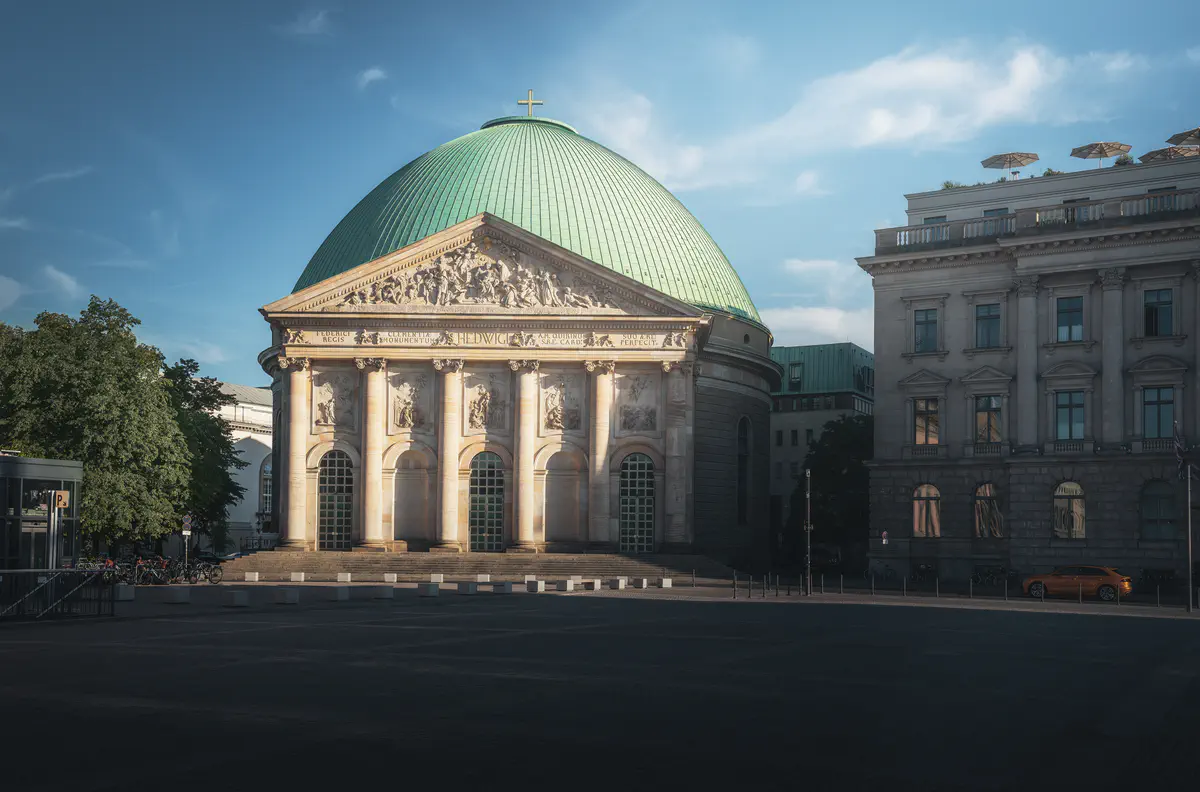
After the Reformation took hold in Brandenburg-Berlin in 1539, the region became firmly Protestant. Catholic churches were dissolved, church structures were reorganized, and for nearly two centuries Berlin remained overwhelmingly protestant.
By the mid-18th century, Berlin began to grow rapidly. Many newcomers were Catholic, but the city had no representative Catholic church. In 1747, the Prussian king ordered the construction of St. Hedwig’s Cathedral, the first major Catholic church built in Berlin since the Reformation.
It was a clear symbol of religious tolerance. It showed that Catholics were allowed to practice their faith openly in a Protestant state. Today St. Hedwig stands as an important reminder that Berlin’s religious history is not only about conflict, but also about coexistence and gradual acceptance.
St. Hedwig’s architecture and interior are also different from most churches in Berlin. The building has a round floor plan, inspired by the Pantheon in Rome. This already sets it apart from the typical long, rectangular church layout. Inside, the space is open and centralized, with a strong focus on community rather than hierarchy. The altar stands in the middle, surrounded by seating, creating a calm and modern atmosphere.
Visitors can also access the crypt, where Bernhard Lichtenberg is buried. He was a Catholic priest who openly prayed for persecuted Jews during the Nazi period and was later killed as a result of his resistance. His grave makes the cathedral an important place of moral remembrance.
—
Hopefully you had enjoyed this article. By no means are our article and lists perfect, it is based on personal opinions. However, let us know if you have more interesting churches to share with us!
If you are around in Berlin, be sure to visit us during our worship hours. Every Sunday at 09:30AM in Händelallee 20, 10557 Berlin. We are an international church and use English in our worship.