
When Both Kaisers Got Bombed (and Only One Became Famous)
Berlin once had two grand imperial memorial churches. Both were bombed. Both were reborn. But only one became a tourist superstar.
Two churches, two fates
Kaiser-Wilhelm-Gedächtniskirche
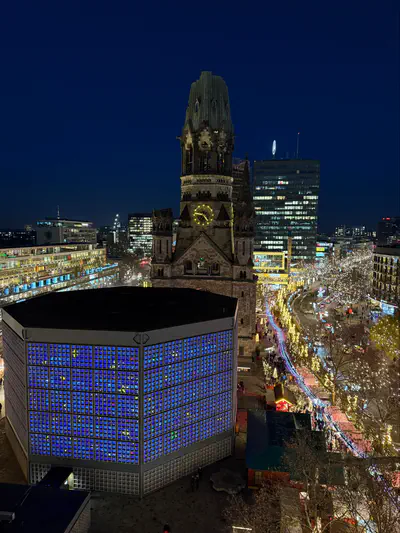
The spire that stands jagged on Kurfürstendamm is Berlin’s most famous war ruin. Bombed in 1943 and left partly standing, it was later joined by a striking modern ensemble. The broken tower became a living memorial and one of Berlin’s most photographed symbols of resilience.
Kaiser-Friedrich-Gedächtniskirche
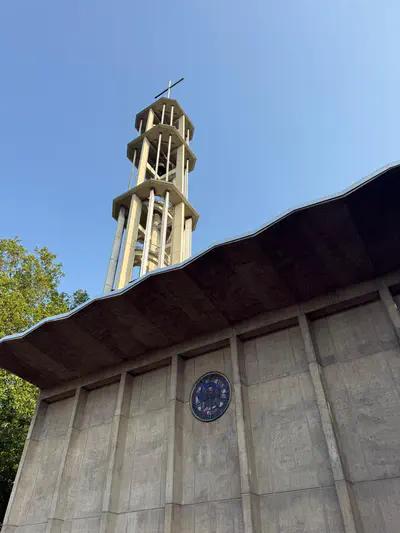
Built in the 1890s near the Tiergarten to honor Emperor Frederick III, it was also hit hard in the war and demolished in the 1950s. A new modern church rose nearby, serving its local congregation rather than tourists. Same imperial roots. Same wartime scars. But a much quieter afterlife.
Both were bombed. One became a global icon
The Allied air raids didn’t spare either Kaiser. The difference was in what came next. Kaiser Wilhelm’s ruined spire was preserved intentionally, turning destruction into a symbol of peace. Kaiser Friedrich’s ruins were cleared, its story continuing not in stone but in community life.
The twist: same wounds, same spirit
History draws an eerie echo between Berlin’s two imperial memorial churches. Kaiser-Friedrich-Gedächtniskirche and Kaiser-Wilhelm-Gedächtniskirche were both born in the Wilhelmine era as monuments to the crown. And both were torn open by war. After the devastation, their futures split. KFG remained rooted in its historic authorship by Johannes Vollmer, while KWG became the stage for Egon Eiermann’s bold postwar interpretation. His modern ensemble on Kurfürstendamm set a new architectural language in Berlin: sparse, geometric, contemplative, a posture of truth over triumph.
What they share
• Conceived as imperial memorials • Scarred by bombing during World War II • Reborn through modernist lenses, one preserved and adapted, the other radically redesigned • Living symbols of remembrance rather than victory • Places where architecture, memory, and faith still intersect
Why the quieter church matters
Kaiser Friedrich’s congregation may not have souvenir stalls or postcard fame, but it carries Berlin’s heartbeat of quiet endurance. In a city that rebuilt itself from ashes, it stands as a living reminder that hope doesn’t always shout from the skyline.
Come and see
Curious about the less-famous Kaiser who was bombed but not forgotten?
Join us at International Reformed Evangelical Church every Sunday at 9.30 am. You’ll find history, modernist beauty, and a warm community that still carries the story forward.